

The Ultralight Backpacking Gear List: Curated Essentials for the 2026 Explorer
, Von Shopperdot, 17 min Lesezeit
, Von Shopperdot, 17 min Lesezeit
What if your heaviest burden on the trail isn't the physical weight of your pack, but the fear of what you left behind? You want to move faster and feel lighter. However, the wall of technical jargon and the high cost of…
What if your heaviest burden on the trail isn't the physical weight of your pack, but the fear of what you left behind? You want to move faster and feel lighter. However, the wall of technical jargon and the high cost of replacing an entire kit often feel like insurmountable obstacles. It's a common struggle for those who value both performance and peace of mind. We believe that true minimalism isn't about deprivation. It's about intentionality.
This guide delivers a curated ultralight backpacking gear list designed for the 2026 explorer. You'll master the art of the sub-10-pound base weight without sacrificing the modern comforts of the trail. With the ultralight market projected to reach $3.47 billion by 2034, the options available to you are more refined than ever. We'll preview trail-tested essentials, from advanced backpacks to high-efficiency stoves, ensuring your gear looks as good as it performs. It's time to refine your trek and embrace a more efficient way to explore.
Freedom isn't found in what you pack. It's found in what you leave behind. Embracing The Philosophy of Ultralight is the first step for any modern trekker. In 2026, the 10-pound base weight isn't a restrictive limit; it's a gold standard for those who value agility. Creating a refined ultralight backpacking gear list is about intentionality. You aren't just surviving the trail. You're mastering it through careful curation. This shift from "carrying everything" to "carrying exactly what you need" transforms the journey. It replaces the burden of heavy loads with the psychological benefit of mental clarity. You'll cover more miles with less fatigue. You'll experience the wild instead of just enduring it.
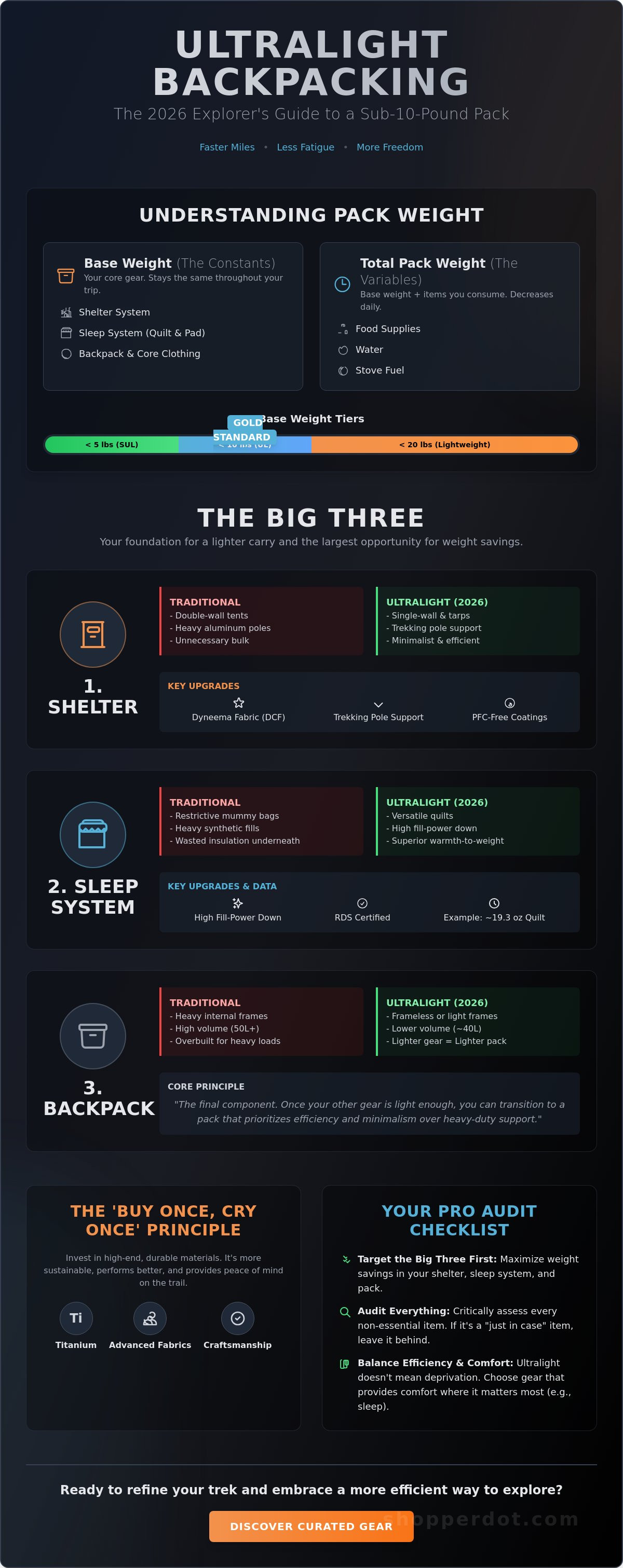
Your base weight is the foundation of your kit. It includes everything in your pack that isn't a consumable. Think of your shelter, sleep system, and the pack itself. We exclude food, water, and fuel because these weights fluctuate throughout the trip. Focusing on base weight allows for a consistent, objective standard of measurement. In the current trekking landscape, we define categories by these numbers. A lightweight kit sits under 20 pounds. An ultralight kit hits the 10-pound mark. Some elite explorers even aim for "super-ultralight" at under 5 pounds. Optimizing these constants is the most effective way to improve your trail performance. It ensures that your ultralight backpacking gear list remains efficient from the first mile to the last.
Quality materials outperform bulk. Every time. The modern explorer prioritizes refinement over volume. We look for advanced materials like Dyneema Composite Fabric (DCF) and Titanium. These aren't just lighter; they're fundamentally more durable. Investing in high-end equipment is a commitment to craftsmanship. It's a rejection of the "disposable" culture of traditional retail. This "buy once, cry once" approach reduces long-term waste. It's a more sustainable way to engage with the outdoors. Beyond performance, there's an aesthetic value to well-designed gear. A curated kit looks as good as it performs. It favors timeless, minimalist design over fleeting outdoor fashion trends. When your gear is reliable and beautiful, you can focus entirely on the horizon. High-quality equipment isn't an expense; it's an investment in your freedom.
Your journey toward a sub-10-pound base weight begins with three critical items. These are your shelter, sleep system, and the pack itself. Collectively known as "The Big Three," they represent the most significant opportunity for weight reduction. A modern ultralight backpacking gear list prioritizes these foundations to ensure maximum efficiency on the trail. It's not just about weight. It's about finding gear that aligns with a refined, intentional aesthetic.
The 2026 season sees a decisive shift toward single-wall shelters and minimalist tarps. Traditional double-wall tents often carry unnecessary bulk. Single-wall designs utilizing advanced composites like Dyneema offer superior weather resistance at a fraction of the mass. Many explorers now favor trekking pole-supported shelters. These designs use your existing hiking poles as the frame. This eliminates the need for heavy aluminum poles. To keep your gear safe during transit to the mountains, consider a stylish waterproof backpack for men commuting 2026. Beyond weight, look for ethical manufacturing. Modern shelters increasingly use PFC-free coatings to protect both the user and the environment. This commitment to sustainability is essential for the conscious explorer.
Sleep systems have evolved beyond the restrictive mummy bag. Quilts are the preferred choice for the modern explorer. By removing the compressed insulation underneath you, quilts offer a superior weight-to-warmth ratio. High-fill power down provides incredible warmth while remaining highly packable. The Enlightened Equipment Enigma 20 Quilt is a prime example of this efficiency, weighing approximately 19.28 oz. Always verify that your insulation is ethically sourced through the Responsible Down Standard (RDS). Choosing a sleeping surface that balances comfort and weight is equally vital. Inflatable pads offer modern tech and cushion, while closed-cell foam remains the king of durability. For a deeper dive into specific weight ratings, refer to a comprehensive gear checklist.
The final component is the pack. Once your other gear is light enough, you can transition to a frameless or lightweight internal frame pack. The Hyperlite Mountain Gear Unbound 55, weighing around 1 lb 14.2 oz, exemplifies this minimalist approach. Alternatively, the Zpacks Arc Haul Ultra 60L, weighing just 21.9 oz, demonstrates how modern materials redefine capacity. These packs focus on load transfer and ventilation without the complex, heavy suspension systems of the past. They are the ultimate expression of trail-tested design. Discover our range of high-performance backpacks to complete your transition to ultralight.
Mastering the 10-pound base weight requires more than just a light tent. It demands a critical look at the smaller items that often accumulate "stealth weight." Every ounce in your kitchen and tech kit must earn its place. A refined ultralight backpacking gear list treats these essentials with the same intentionality as your shelter. Efficiency is the goal. Modern design is the medium. By selecting multi-purpose tools and advanced materials, you ensure your kit remains agile without sacrificing the needs of the modern explorer.
Titanium is the standard for the 2026 explorer. It offers unmatched durability without the mass of traditional aluminum. Pair a 550ml or 750ml titanium pot with a high-performance canister stove. The MSR PocketRocket Deluxe is a staple in this category, weighing just 2.9 oz. It provides pressure-regulated reliability in varied conditions. For those seeking absolute minimalism, cold soaking eliminates the stove and fuel entirely. This method uses a lightweight, leak-proof container to rehydrate meals over several hours. Whether you cook or soak, choosing a curated culinary essential ensures your trail meals remain a highlight of the day. For a complete breakdown of secondary items, consult REI's ultralight gear checklist.
Modern safety relies on connectivity. Satellite communicators and GPS devices are non-negotiable for remote treks. Managing these high-value electronics requires organization and protection. We recommend using a dedicated security bag to shield your tech from moisture and impact. This keeps your power banks, cables, and communication tools in one accessible, secure location. For extended trips, lightweight solar panels offer a sustainable energy source. Most 2026 explorers find that a high-capacity 10,000mAh power bank provides the best weight-to-utility ratio for five-day excursions. It’s about having enough power to stay safe, but not a gram more.
Water filtration must be fast. Squeeze-style filters or integrated bottle systems allow you to hydrate on the move. Don't let heavy pump filters slow your momentum. Similarly, reconsider your choice of tools. A heavy multi-tool often contains features you'll never use. A single, high-quality folding blade is lighter and more functional for most trail tasks. It’s a return to craftsmanship. One tool. One purpose. This philosophy reduces clutter and focuses your kit on what truly matters. When every item is chosen with purpose, the trail becomes a place of clarity rather than a series of logistical hurdles.
Transitioning to a minimalist kit is a process of refinement. It isn't about an overnight overhaul. It's about intentional selection. A structured ultralight backpacking gear list provides the framework you need to shed weight without sacrificing safety. Start with a clear strategy. Focus on high-impact changes first. This approach ensures your kit remains reliable while you move toward the 10-pound gold standard. True freedom on the trail comes from trust in your equipment.
Start with a scale. Weigh every item in grams. Ounces are often too vague for precision curation. This data-driven approach forces you to face the "hidden" weight of your kit. Conduct the "did I use it?" test for every piece of equipment. If an item stayed at the bottom of your pack for the last three trips, it's likely redundant. Extra clothing and heavy multi-tools are common culprits. Redundancy is the enemy of efficiency. However, don't be a zealot. We allow the "Luxury Item" rule. One item that brings pure joy, like a lightweight camera or a small journal, is permitted. It keeps the soul of the trek alive while the rest of your kit remains lean.
Sequence matters. Upgrading your pack should be the final step, not the first. A frameless pack requires a light, compact load to function correctly. Carrying heavy gear in a minimalist pack is a recipe for discomfort. Focus on your internal systems first. Look for high-quality materials for your personal care and hygiene kits. Transitioning to a minimalist first-aid kit and using concentrated, eco-friendly soaps reduces both bulk and weight. Once your "Big Three" and trail essentials are optimized, your current pack will feel cavernous. That's the moment to switch to a dedicated ultralight carrier. Explore our collection of Equipment & Accessories to begin your transition with confidence.
Mastery comes through integration. Your clothing is an extension of your sleep system. In 2026, we don't carry "camp clothes." We carry layers. Wear your insulated jacket inside your quilt on freezing nights to extend its temperature range. This versatility allows for a lighter base weight sleep system. Finally, never take a new kit on a major expedition without a shakedown hike. Short, local trips reveal the truth about your gear. They expose flaws and confirm your choices. Practice reveals what theory cannot. Refinement is a journey, and every mile is an opportunity to streamline your experience.
The 2026 explorer seeks a specific harmony. It's the intersection of high-end design and rugged trail performance. Your ultralight backpacking gear list is more than a inventory of weights. It's a definitive statement of your values. It reflects a desire for substance without the clutter of traditional retail layers. Shopperdot understands this balance. We act as a conscious, global curator. We select only the most reliable, aesthetically refined gear for those who venture into the wild. True sophistication on the trail isn't about how much you carry. It's about the quality of every single ounce.
Our direct-to-consumer model is built on transparency and quiet confidence. We bypass unnecessary markups to offer premium gear at honest prices. This approach ensures that quality is accessible to every explorer, regardless of their location. We prioritize ethical sourcing and modern solutions that stand up to the rigors of the backcountry. Every product in our collection undergoes rigorous vetting. We back this with a definitive numerical quality guarantee. This acts as our seal of trust for the global shopper. This commitment to excellence extends to every member of your trekking team. If you're preparing for the trail with a four-legged companion, consider our curated pet products. Reliability shouldn't be limited by geography. We deliver your ultralight kit anywhere in the world.
The trail is a place for clarity. It's a space where the noise of the modern world fades into the rhythm of your stride. Clutter has no place in the backcountry. By reducing your physical burden, you invest directly in your experience. You move with grace. You see more of the horizon. You feel less of the fatigue that plagues the over-prepared. With the ultralight market growing at a CAGR of 7.4%, the technology available to you is more advanced than ever. Use it to your advantage. Focus on the essentials that allow you to stay out longer and go further.
Before you depart for your next 2026 adventure, verify your final kit against this refined checklist:
Investing in your gear is investing in your freedom. When your equipment is reliable and beautiful, you can focus entirely on the landscape. Ready to refine your journey? Explore our full collection of modern backpacks and camping gear to complete your 2026 kit.
The journey toward a sub-10-pound base weight is a transition toward absolute clarity. You've explored the necessity of optimizing the "Big Three" and the efficiency of titanium trail essentials. By prioritizing intentionality over volume, you transform the trekking experience from one of endurance to one of discovery. This ultralight backpacking gear list serves as your definitive blueprint for a more agile, focused adventure in 2026. Minimalism isn't a sacrifice; it's a liberation from the unnecessary.
We believe that premium quality should be accessible. Our direct-to-consumer pricing ensures you receive elite craftsmanship without traditional retail inflation. We offer a curated selection of high-quality materials designed to endure the most demanding landscapes. Whether you're trekking through the Alps or the High Sierras, we provide worldwide shipping to Europe and beyond. Every piece of equipment in our collection is chosen for its substance, durability, and modern aesthetic. Trust in gear that performs as well as it looks.
Discover our curated collection of modern backpacks and gear. The trail is waiting. Step into the wild with the quiet confidence of a kit built for the modern era. Your most efficient journey starts here.
Under 10 pounds is the definitive industry standard for an ultralight base weight. This figure represents the total weight of your gear excluding consumables like food, water, and fuel. Achieving this target requires a curated approach to every item in your kit. While 10 pounds is the gold standard for most, elite explorers often aim for a sub-5-pound "super-ultralight" status for maximum trail agility.
Modern materials offer exceptional durability without the unnecessary mass of traditional fabrics. Advanced composites like Dyneema Composite Fabric are technically stronger than steel by weight. While minimalist gear requires more intentional care and proper site selection, it doesn't sacrifice rugged performance. Choosing premium materials ensures your ultralight backpacking gear list remains reliable through years of backcountry use.
Start by auditing your current pack and removing every redundant item. You don't need to replace your entire kit in a single transaction. Focus on replacing your heaviest individual items first to achieve the most significant weight savings per dollar spent. Look for multi-functional tools and versatile clothing layers to reduce the total number of items you need to carry.
Comfort and minimalism are no longer mutually exclusive in the modern trekking era. High-tech inflatable pads and wide quilts provide a sleep experience that often surpasses traditional sleeping bags. A lighter pack also significantly reduces the physical strain on your joints and back during long mileage days. True comfort comes from a kit that performs efficiently without weighing you down.
The "Big Three" refers to your shelter, your sleep system, and your backpack. These components are the heaviest individual items in any kit. Optimizing these three categories is the fastest way to reach a sub-10-pound base weight. By focusing on these foundations, you create a lighter carry that allows for a more enjoyable and less fatiguing journey.
Selection depends on your total gear volume and your specific torso length. Most ultralight trekkers find that a 40L to 55L pack provides ample space for multi-day trips when using a refined gear list. Measure your torso accurately to ensure the pack's suspension system transfers weight correctly to your hips. A properly fitted minimalist pack should feel like a natural extension of your body.
Quilts offer a superior weight-to-warmth ratio by eliminating the compressed, ineffective insulation found underneath a traditional bag. They provide greater freedom of movement and easier temperature regulation for side sleepers. For the 2026 explorer, a high-fill power down quilt is the most efficient choice for a sleep system. It packs smaller and weighs significantly less than a standard mummy bag.
Most modern ultralight shelters don't require a separate footprint for standard trail use. High-performance floor materials are engineered to be puncture-resistant and waterproof on their own. Skipping the footprint saves several ounces of weight and reduces pack bulk. Simply clear your campsite of sharp debris before pitching your shelter to maintain the integrity of the fabric over time.